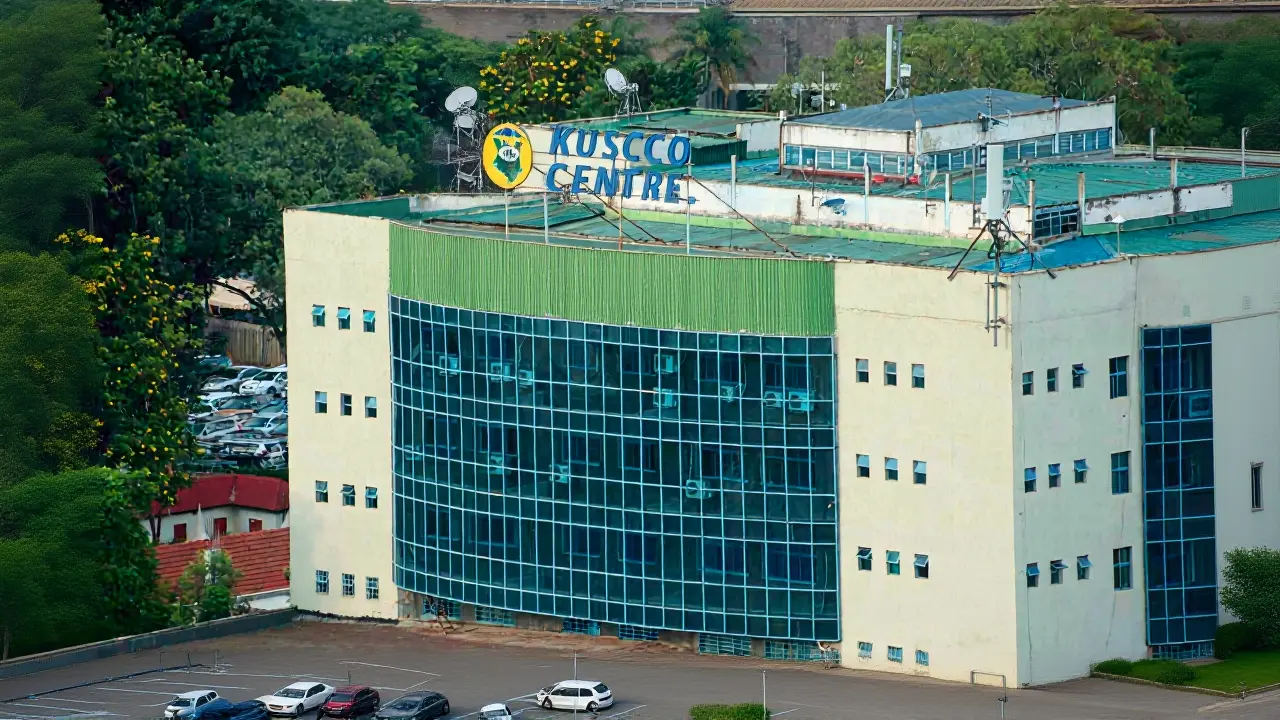
It’s a nightmare scenario for any savings group: you park your members’ hard-earned money in what looks like a safe, high-yield investment, only to wake up and find the institution gone. That’s exactly what is happening right now across Kenya’s cooperative sector. Following the sudden collapse and impending liquidation of an insurance arm tied to Kenya Union of Savings and Credit Co-operatives Limited, dozens of Saccos are staring down massive financial holes.
The trouble broke on Thursday, 12 March 2026, when reports confirmed that the insurer associated with KUSCCO was being shut down by the state. The immediate fallout? A staggering KSh660 million in converted insurance claims—money that Saccos had swapped for deposits promising better returns—is now effectively frozen or lost. For ordinary members who trusted these institutions with their livelihoods, the shockwaves are already being felt.
The High-Yield Trap
Here’s how we got here. It wasn’t just poor management; it was a specific financial maneuver that looked too good to be true. Several Saccos had agreed to convert outstanding insurance claims into deposit placements with the KUSCCO-linked insurer. On paper, this made sense. Instead of waiting for standard claim payouts, they could lock in higher interest rates. It’s the classic investor dilemma: chase the yield, or play it safe?
Turns out, the yield came with a hidden cost. The stock associated with this financial entity had been under constant pressure for months, dropping more than 45 percent year-to-date before the news broke. While the numbers were flashing red warnings, many Saccos remained exposed. Now, those KSh660 million in deposits are at risk of total write-off, meaning the Saccos themselves may have to absorb the loss from their own reserves—or worse, cut back on member services.
Real Losses, Real People
Behind the aggregate millions are individual stories of distress. Sheria Sacco, for instance, has reportedly lost KSh146 million in member deposits linked to this collapse. That’s not abstract accounting; that’s housing loans delayed, education fees unpaid, and small businesses stalled.
Then there’s LSK Sacco. They had deposited KSh62 million of members’ money with the troubled entity. In a rare silver lining, LSK managed to salvage KSh42 million before the gates closed completely. But that still leaves KSh20 million hanging in the balance—a significant chunk of capital that could have supported hundreds of families.
The pattern is clear. These weren’t rogue actors operating in the shadows. These were legitimate Saccos making strategic decisions based on information available at the time. The betrayal feels sharper because it happened within the very ecosystem designed to protect cooperatives.
Government Moves In
The government didn’t wait long to act. The trigger for the liquidation order was alarming: allegations of an illegal withdrawal of KSh6 billion from KUSCCO. Whether fully proven or not, the scale of the alleged breach forced the State Department for Cooperatives to intervene decisively.
The Principal Secretary in the State Department for Cooperatives outlined a two-pronged response during a televised briefing. First, a lifeline for struggling Saccos: regulators will allow affected societies to spread their loss provisions over a period of up to 10 years. This prevents immediate insolvency for smaller groups but signals a long road to recovery.
Second, structural reform. The ministry announced plans to overhaul both Sacco Societies Regulatory Authority (SASRA) and KUSCCO itself. Amendments to the Sacco Societies Act of 2008 are also on the table, aimed at tightening oversight and preventing similar ‘illegal withdrawals’ in the future. As the PS noted, the goal is to ensure this kind of systemic failure doesn’t happen again.
What This Means for Members
If you’re a member of a Kenyan Sacco, keep an eye on your statements. While the 10-year provisioning window buys time for the institutions, it doesn’t erase the debt. Some Saccos might need to raise membership fees, reduce loan disbursements, or dip into liquidity buffers to cover these gaps.
Trust, once broken, is hard to rebuild. The cooperative movement in Kenya has always thrived on the principle of mutual aid. When the umbrella body (KUSCCO) and its linked entities fail, it shakes the foundation of that trust. Investors and members alike will likely become more cautious, demanding stricter transparency before placing funds anywhere beyond traditional bank accounts.
Background: A Sector Under Pressure
This isn’t an isolated incident in the broader context of African finance. Cooperative sectors globally face challenges with governance and regulatory capture. In Kenya, Saccos have grown exponentially, managing billions in assets. Yet, the regulatory framework has often struggled to keep pace with their size and complexity.
The decline in the insurer’s stock price by over 45% earlier this year should have been a bellwether. Financial markets often know what regulators see later. The fact that Saccos continued to place funds despite these warning signs highlights a gap in risk assessment capabilities among some cooperative boards. Moving forward, expect SASRA to demand more rigorous independent audits and real-time reporting from all registered societies.
Frequently Asked Questions
How much money is actually at risk for Saccos?
Reports indicate that approximately KSh660 million in converted insurance claims are directly at risk. Additionally, specific cases like Sheria Sacco’s KSh146 million loss and LSK Sacco’s partial exposure highlight that individual losses vary. The total systemic impact could reach billions if other undisclosed exposures come to light.
Will members lose their savings?
Direct member savings held in core deposit accounts are generally protected by SASRA regulations, provided the Sacco remains solvent. However, since Saccos must absorb these institutional losses, members might experience reduced dividends, slower loan approvals, or increased service fees as Saccos rebuild their capital bases over the next decade.
Why did the government decide to liquidate the insurer?
The primary catalyst was the discovery of an alleged illegal withdrawal of KSh6 billion from KUSCCO. This massive breach of fiduciary duty, combined with the insurer’s deteriorating financial health (evidenced by a 45% stock drop), left the government with no choice but to initiate liquidation to prevent further contagion in the financial sector.
What is the 10-year provisioning plan?
To avoid immediate bankruptcy for affected Saccos, the State Department for Cooperatives has allowed them to spread the recognition of these losses over up to 10 years. This means Saccos can gradually adjust their financial statements rather than taking a single, devastating hit that would wipe out their equity overnight.
How will SASRA change its oversight?
SASRA is undergoing restructuring alongside proposed amendments to the Sacco Societies Act of 2008. Expected changes include stricter controls on where Saccos can invest member funds, mandatory real-time reporting of large transactions, and enhanced auditing powers to detect irregularities like the KSh6 billion withdrawal earlier.

Navya Anish
June 19, 2026 AT 13:45Oh, spare me the tears for these so-called 'hard-earned' savings!
If you put your money in a scheme promising returns that defy gravity, you deserve every penny lost. It is not a nightmare; it is basic arithmetic failing because people are too greedy to read the fine print. The system isn't broken; the participants are just delusional.
Subramanian Raman
June 20, 2026 AT 20:38One must ponder the deeper philosophical implications of trust in modern financial structures. :/ When we delegate our security to entities driven by yield rather than stability, do we lose something more profound than mere currency? Perhaps the real loss is the erosion of communal faith. We build towers of glass and wonder why they shatter when the wind changes direction. It is a tragic cycle of hope and despair that repeats itself across generations. :(
Shreyanshu Singh
June 21, 2026 AT 18:32so basically everyone got played lol
the whole thing smells like insider trading from day one
who really benefited from those high yields?
probably some suits in nairobi counting their bonuses while regular folks cry over empty accounts
typical corrupt setup where the little guy always pays the price
not surprised at all honestly
Sohni Bhatt
June 22, 2026 AT 10:27It is utterly disheartening to observe the sheer lack of intellectual rigor displayed by the boards of these Saccos, who seemingly ignored the glaring red flags presented by the market’s downward trajectory, which was evident long before the inevitable collapse occurred, thereby demonstrating a profound ignorance of fundamental economic principles that should be common knowledge among any self-respecting financial institution, let alone those purporting to serve the cooperative community with such egregious negligence and disregard for the fiduciary duties they swore to uphold, creating a situation that is nothing short of scandalous and indicative of a systemic failure of governance that plagues our entire sector.
Sanjay Kumar
June 24, 2026 AT 04:18Look, mistakes happen in business but how we handle them matters most. The government stepping in with a 10-year plan shows they want to fix this properly instead of just bailing people out instantly. It’s tough on the members right now, I know, but rebuilding trust takes time and patience. Let’s support the regulatory changes so this doesn’t happen again. We can learn from this and make our cooperatives stronger together.
Gaurav Jangid
June 24, 2026 AT 18:38OMG!!! This is absolutely heart-wrenching!! 😢😭 How could they let this happen??!! My heart goes out to every single member who trusted these institutions!! 💔💔 It feels like a betrayal of the highest order!! 😡😡 Why does this keep happening??!! Are we never going to learn??!! 🤯🤯 I am literally shaking with rage and sadness!! 😤😤 Someone needs to be held accountable RIGHT NOW!! ⚖️⚖️ This is a disaster of epic proportions!! 🌪️🌪️
Ghanshyam Gohel
June 25, 2026 AT 17:20The structural integrity of the cooperative model is severely compromised by such actions.!!! It is imperative that SASRA enforces stricter protocols immediately.!!! Members must remain vigilant and demand transparency.!!! The 10-year provisioning is a necessary evil to prevent total collapse.!!! We must hold leadership accountable for their negligence.!!! Trust is earned through consistent ethical behavior.!!!
Nathan Lemon
June 26, 2026 AT 12:54This incident serves as a poignant reminder of the delicate balance between risk and reward in financial management. As observers from abroad, we note that the Kenyan cooperative sector has been a beacon of development, yet this stumble highlights universal challenges in governance. The proposed reforms may well set a precedent for other nations facing similar regulatory gaps. It is crucial that international best practices are integrated into local frameworks to ensure sustainability and protect the livelihoods of ordinary citizens who rely on these institutions for their economic survival.
Abhijit Pawar
June 26, 2026 AT 15:14Stop making excuses. The board failed. Period. They saw the stock drop 45% and still moved money. That is incompetence or fraud. No middle ground here. Fix the laws. Fire the responsible parties. Move on.
lavanya tolati
June 28, 2026 AT 06:27i feel so bad for the families affected especially those relying on education loans it is heartbreaking to see trust broken like this we need better protection for small savers everywhere
srinivasan sridharan
June 29, 2026 AT 05:28How delightful that the government finally decided to intervene after billions were allegedly siphoned off. Truly inspiring leadership. One might expect such proactive measures earlier, but no, we had to wait for the ship to sink. Bravo. The 10-year recovery plan sounds like a fantastic way to ensure members suffer for another decade while executives enjoy golden parachutes. Just wonderful.
Anant Kamat
June 30, 2026 AT 00:45just another day in finance bro
people get greedy chase yields and boom gone
nothing new here
hope SASRA actually does something this time though
otherwise its just more of the same drama
Indrani Dhar
June 30, 2026 AT 05:19it is obvious this was planned from the beginning
the illegal withdrawal of 6 billion did not happen in a vacuum
someone inside KUSCCO fed the vultures
regulators turned a blind eye because they were paid to look away
do not believe the narrative about poor management
this is a conspiracy to strip assets from the working class
the stock drop was manipulated to scare investors while insiders sold
wake up sheeple
Raja Meena
July 1, 2026 AT 21:40The moral decay within these institutions is palpable. To prioritize speculative gains over the security of members’ savings is a sin against the very principle of cooperation. These leaders have abandoned their ethical duty and now face the consequences. Society must reject such greed and demand righteousness in financial stewardship. There is no excuse for endangering the livelihoods of innocent families for the sake of inflated returns.
Pooja Kiran
July 2, 2026 AT 07:29Let’s be real, the alpha in this trade was zero. The risk-adjusted return was negative from the start. Anyone with basic quant skills saw the volatility spike. Converting claims into deposits in a distressed asset is textbook stupidity. The board lacked even rudimentary due diligence. It’s not just bad luck; it’s structural incompetence. Expect SASRA to introduce mandatory stress testing models next quarter. Until then, stay liquid.
Gaurav sharma
July 2, 2026 AT 21:21You fools walked right into the trap. Greed blinded you to the obvious warning signs. Now you cry about losses while the smart money cashed out months ago. This is karma for thinking you could beat the market without doing the work. Stop blaming the government and blame yourselves for being lazy investors. Learn from this or stay poor forever.
Megha Khairnar
July 3, 2026 AT 10:39We must come together to heal from this wound. Anger will not bring back the money, but unity and reform will strengthen our communities. Let us support the victims and push for transparent governance. Every voice matters in rebuilding trust. Peace and patience are our greatest tools now.
Twinkle Vijaywargiya
July 4, 2026 AT 19:39Let us all stand together in solidarity with the affected members!!! This is a collective challenge that requires our united response!!! We must advocate for stronger regulations and greater accountability!!! Together we can ensure a fairer future for all!!! Support your local Saccos but demand transparency!!! We are stronger when we act as one!!!
Swetha Sivakumar
July 6, 2026 AT 18:24hey guys just wanted to say hang in there
its rough but things will get better
make sure you check your statements regularly
and talk to your sacco managers directly
weve all seen worse crises pass
stay calm and informed
diksha gupta
July 7, 2026 AT 03:37silver linings exist even in dark clouds
this crisis might force much needed innovation in the sector
imagine a future where blockchain tracks every transaction
no more hidden withdrawals
let this be the catalyst for change
stay hopeful friends